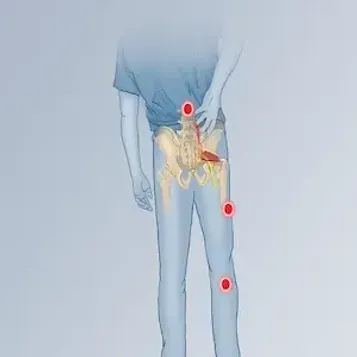
Shoulder Impingement — Subacromial Syndrome
Shoulder Impingement
(Subacromial Syndrome)
Subacromial shoulder syndrome is the most common cause of shoulder pain — responsible for 44% to 65% of all shoulder problems. It develops as a result of a vicious cycle of rotator cuff impingement against the subacromial arch.
What is the rotator cuff and what does it do?
The rotator cuff consists of 4 muscles and their tendons that wrap around the humeral head:
- Supraspinatus
- Infraspinatus
- Teres minor
- Subscapularis
These muscles center the humeral head within the glenoid fossa and control shoulder movements in all directions.
How does shoulder impingement develop?
Impingement occurs when the supraspinatus tendon (most commonly) becomes trapped between:
- The humeral head
- The acromioclavicular joint and coracoacromial ligament
Repetitive overhead movements, scapular stabilizer weakness, or poor posture cause the humeral head to slide upward and “pinch” the tendon.
Who gets shoulder impingement?
Risk groups:
- Swimmers (especially freestyle)
- Tennis players and baseball pitchers
- Football players
- Workers who work overhead (bricklayers, painters)
- People with poor posture and weakened trapezius muscle
What are the symptoms of subacromial syndrome?
- Pain when raising the arm above the head
- Pain when lowering the arm (particularly between 60° and 120°)
- Shoulder weakness
- Morning stiffness
- Nighttime pain that disrupts sleep
- Pain when dressing (placing arm behind the back)
How is subacromial syndrome diagnosed?
Diagnosis is made using a combination of:
- Orthopedic tests: Neer test, Hawkins-Kennedy test, Empty can test
- Ultrasound — visualization of tendons and bursa
- MRI — detailed soft tissue imaging (if needed)
How is shoulder impingement treated?
Physical therapy:
- Manual therapy — acromioclavicular and sternoclavicular joint mobilization
- Myofascial release — relaxation of tense muscles
- Dry needling — trigger points in rotator cuff muscles
Kinesiotherapy:
- Humeral head centering exercises
- Scapular stabilizer strengthening (serratus anterior, rhomboids, trapezius)
- Posture correction
Physical procedures:
- Laser therapy
- Ultrasound
- Kinesiology taping
With proper therapy, most patients fully recover without surgery. The key is identifying the cause and addressing the biomechanical dysfunction.
Questions or want to book an appointment?
The initial examination is free. Call us or visit the contact page.
062 8558 510