
What Causes Cervical Radiculopathy?
What Causes Cervical Radiculopathy?
Spinal anatomy
The spine is a complex structure of bones and soft tissue that supports the entire body. The cervical spine (neck) consists of 7 vertebrae (C1–C7) interconnected by:
- Intervertebral discs (shock absorbers)
- Facet joints (enable movement)
- Ligaments and muscles (stabilizers)
Between each pair of vertebrae, nerve roots emerge that innervate the arms, shoulders, and upper body.
Five main causes of cervical radiculopathy
1. Disc herniation
The most common cause in younger patients (20–40 years). The nucleus pulposus breaks through the anulus fibrosus and directly compresses the nerve root. The most commonly affected levels are C5–C6 and C6–C7.
Symptoms: Pain radiating from the neck into the arm, tingling or numbness in the fingers, arm muscle weakness.
2. Spinal canal stenosis
Narrowing of the space through which the nerve roots pass — caused by yellow ligament hypertrophy, bone spurs, or thickening of facet joints.
Symptoms: Pain during neck extension, improvement during flexion.
3. Degenerative disc disease
Loss of disc height reduces the space through which the nerve root exits the spinal canal (foramen). Common cause in older patients.
Characteristic: Gradual, slow development of symptoms.
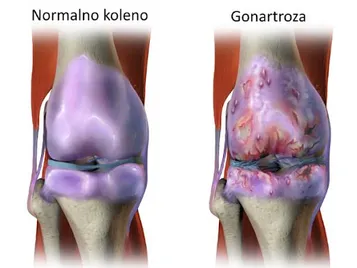
4. Osteoarthritis
Degenerative changes in the facet joints and formation of osteophytes (bone spurs) that compress the nerve root.
Population: Most commonly people over 50 years of age.
5. Osteoporosis
Loss of bone mass can lead to compression fractures of the vertebrae that secondarily press on nerve roots.
Risk group: Postmenopausal women, people with insufficient calcium intake.
Conservative treatment
In most cases, cervical radiculopathy is successfully treated conservatively:
- Manual therapy — cervical mobilization and manipulation
- Traction — mechanical separation of vertebrae reduces pressure on the nerve root
- Dry needling — relaxation of paraspinal muscles
- Physical procedures — laser, TENS, ultrasound
- Kinesiotherapy — cervical spine stabilization exercises
Early intervention and consistent therapy are key to preventing chronification. Surgical intervention is reserved for cases where conservative treatment has not produced results after 6–12 weeks, or when progressive neurological deficit is present.

Questions or want to book an appointment?
The initial examination is free. Call us or visit the contact page.
062 8558 510