Dry Needling
Certified trigger point deactivation technique for reducing pain in muscles, neck, back, and joints.
Definition
What is dry needling?
Dry needling is a modern therapeutic method based on clinical and neuroanatomical knowledge. A thin, sterile needle is inserted directly into a trigger point — a hyperactive pain point within a muscle that causes local and/or referred pain.
The "dry" needle delivers no medication — the effect is purely mechanical and neurological. A local muscle twitch response occurs, the trigger point is deactivated, circulation improves, and pain is reduced.
At Pravdić Manual Therapy Centre, dry needling is always combined with other techniques — manual mobilisation or chiropractic adjustment — for optimal and lasting results.
Dry needling vs. Acupuncture
Applications
What conditions do we treat with dry needling?
Procedure
What does a treatment look like?
Free examination
Functional assessment, palpation, and identification of trigger points. We determine the optimal treatment plan.
Preparation and disinfection
We use only sterile, single-use needles. The treatment area is prepared according to protocol.
Needle insertion
The needle is precisely inserted into the trigger point. You may feel a brief muscle twitch — this is a sign of deactivation.
Treatment lasts 20–30 min
After the treatment we provide recovery recommendations. Mild muscle soreness for 24–48 hours is a normal tissue response.
See it live
Dry needling in practice
Short video clips from treatment sessions
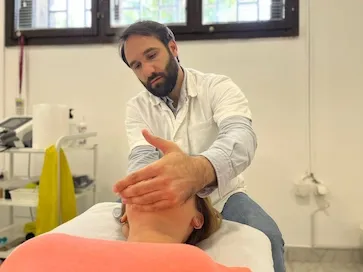
Dry needling treatment — trigger point deactivation
Answers
Frequently asked questions
What is dry needling?
Dry needling is a modern therapeutic technique in which a thin, sterile needle is inserted directly into a trigger point — a hyperactive pain point within a muscle. The "dry" needle delivers no medication; the effect is purely mechanical and neurological. The goal is deactivation of the trigger point and reduction of pain.
Is dry needling the same as acupuncture?
No. Dry needling and acupuncture use similar needles but are completely different methods. Acupuncture originates from traditional Chinese medicine and is based on meridians and energy flows. Dry needling is grounded in modern anatomical and neurological knowledge — it targets specific muscular trigger points confirmed by clinical examination.
Is the treatment painful?
The needle insertion is minimally uncomfortable. During the treatment you may feel a brief muscle twitch (the "twitch response") — this is a normal and desirable reaction indicating trigger point deactivation. Mild muscle soreness for 24–48 hours after treatment is normal, similar to post-exercise soreness.
What conditions is dry needling used for?
Dry needling is effective for neck and back pain, tennis and golfer's elbow, shoulder pain, sciatica, hip pain, piriformis syndrome, plantar fasciitis, cervicogenic headache, IT band syndrome, and sports muscle and tendon injuries.
How many treatments are needed?
Most patients notice significant improvement after just 1–3 treatments. For chronic conditions, a series of 4–6 treatments is recommended. The exact number of treatments depends on the condition, duration of symptoms, and individual response — assessed at the initial examination.
Are there contraindications?
Yes. Dry needling is not recommended for people with needle phobia, blood clotting disorders, active infection or inflammation at the treatment site, pregnant women in the first trimester, or patients on anticoagulant therapy. All contraindications are checked at the free initial examination.
How long does a treatment last?
The dry needling treatment itself lasts 20–30 minutes. Combined with other techniques (chiropractic, manual mobilisation), the entire session lasts 35–45 minutes.
What is the cost of a dry needling treatment in Belgrade?
One session at Pravdić Manual Therapy Centre costs 5,000 RSD and includes a combination of 2–3 therapeutic techniques tailored to your condition. The initial examination is free.