7 Things You Should Know About Dry Needling
7 Things You Should Know About Dry Needling
1. What is dry needling?
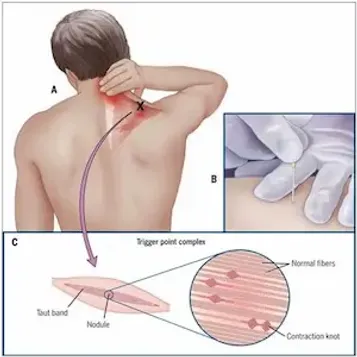
Dry needling is a technique performed by highly trained chiropractors and physiotherapists. It is used to treat neuromuscular injuries and disorders. “Dry” refers to the fact that the needle introduces no medication into the tissue — treatment is achieved solely through the mechanical effect of the needle.
A thin needle is inserted directly into a trigger point — a hyperactive pain point in a muscle — with the goal of “deactivating” that point and restoring normal muscle function.
2. Dry needling is not acupuncture
Although both techniques use thin needles, there is a fundamental difference:
| Dry needling | Acupuncture | |
|---|---|---|
| Basis | Scientific anatomy and physiology | Traditional Chinese medicine |
| Target | Trigger points in muscles | Meridians of energy flow |
| Approach | Anatomical and diagnostic | Holistic and energetic |
3. What is a trigger point?
A trigger point is a hypersensitive spot within muscle tissue — a localized zone of stiffness within a taut band of muscle fibers. Characteristics:
- Painful to the touch
- Sends pain to distant regions (referred pain)
- Reduces the muscle’s range of motion
- Develops due to acute trauma, chronic overload, or stress
4. What is the twitch response?
When the needle hits an active trigger point, a local twitch response (LTR) occurs — a brief contraction of the muscle bundle. This response is a favorable sign — it indicates that the trigger point has been precisely located and deactivation is occurring.
5. Is dry needling painful?
Needle insertion may cause:
- Brief pain upon needle entry
- Deep, dull aching or a “cramping” sensation when the needle reaches the trigger point
- After treatment — mild muscle soreness 24–48 hours (like after intense exercise)
Pain is generally brief and tolerable. Most patients report that the sensation “feels different from normal pain.”
6. Most common conditions treated with dry needling
Dry needling is used for:
- Neck and head pain (tension headache, cervical syndrome)
- Lower back pain and sciatica
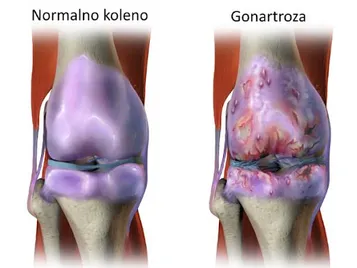
- Knee pain (osteoarthritis, patellar tendinitis)
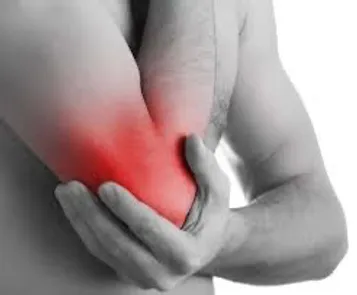
- Shoulder dysfunction and tennis elbow
- IT band syndrome
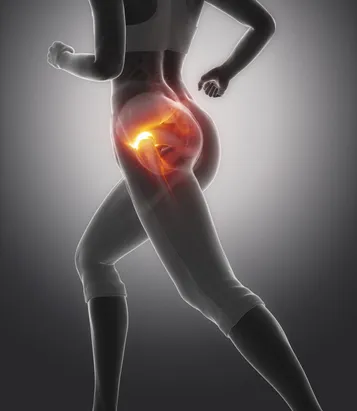
- Hip pain and piriformis syndrome
- Achilles tendinopathy and plantar fasciitis
- Muscle strains and tensions
7. What does the current literature say?
Scientific research confirms the effectiveness of dry needling:
- Meta-analyses show statistically significant pain reduction compared to placebo control
- Combination of dry needling + manual therapy gives better results than either technique alone
- The effect is most pronounced in chronic musculoskeletal conditions
Who can benefit? Almost any patient with musculoskeletal pain who has not responded well to standard treatments — dry needling can be an excellent complementary solution.
Learn more about dry needling therapy in Belgrade — pricing, procedure, certification, and frequently asked questions.
Questions or want to book an appointment?
The initial examination is free. Call us or visit the contact page.
062 8558 510