Hip Pain — Practical Tips for Faster Recovery
Dušan Pravdić March 1, 2023
hip hip pain mobility rehabilitation
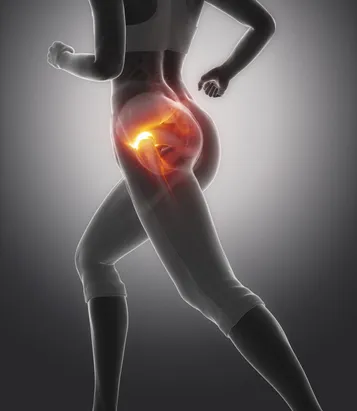
Hip Pain
The hips are among the most stable joints in the body — they bear body weight and enable walking, running, and rotation. However, precisely because of this they are susceptible to dislocations, degenerative changes, and fractures.
Causes of hip pain by age group
Children and infants
- Congenital hip development disorders (dysplasia)
- Perthes disease (impaired blood supply to the femoral head)
Adolescents
- Slipped Capital Femoral Epiphysis (SCFE)
Young adults
- Sports injuries and trauma
- FAI syndrome (femoroacetabular impingement)
Older adults
- Osteoarthritis (coxarthrosis)
- Femoral neck fractures
Pain location
Hip pain can be localized in:
- The groin — most commonly indicates a problem within the joint
- The gluteal region (buttocks) — muscle problems or piriformis syndrome
- The lateral side of the hip — trochanteric bursitis or IT band syndrome
Diagnostic procedures
For precise diagnosis, orthopedic tests are used:
- FABER test — flexion, abduction, external rotation
- FADIR test — flexion, adduction, internal rotation
- OBER test — IT band assessment
- Thomas test — hip flexor assessment
Treatment and recovery
Conservative measures:
- Appropriate footwear with good cushioning
- Regular exercise — swimming and cycling are especially recommended
- Gluteal muscle and hip stabilizer strengthening exercises
- Manual therapy — hip joint mobilization
- Dry needling for muscle trigger points
Daily life tips:
- Avoid sitting with crossed legs
- When standing up, use your arms for support
- Sleep with a pillow between the knees
With proper therapy and activity adaptation, most patients achieve significant improvement.
Questions or want to book an appointment?
The initial examination is free. Call us or visit the contact page.
062 8558 510